

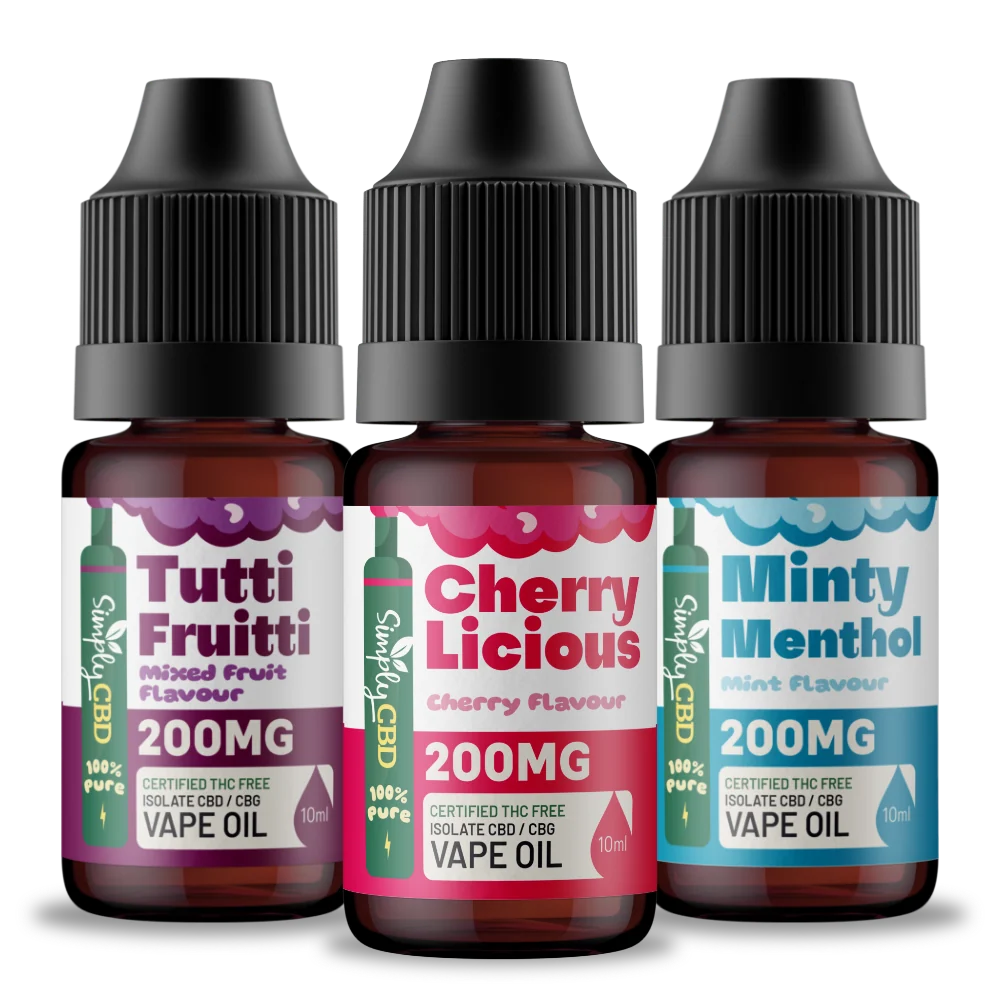
CBD Vape Juice Explained: Ingredients, Effects, CBD Oil Differences and Health Risks
CBD vape juice is a term commonly used for
cannabidiol-containing liquids associated with
electronic vaping devices. However, the expression
does not describe one standardized formulation,
and the safety of inhaling CBD aerosols has not
been established.
Terms such as vape juice CBD, CBD in vape juice,
vape CBD juice, CBD oil vape juice, and CBD infused
vape juice frequently appear in online discussions.
Although they may sound interchangeable, they can
describe different substances and product categories.
This guide explains the chemistry of CBD,
the differences between CBD oil and vaping-related
liquids, the potential effects of cannabidiol,
and the health concerns associated with
inhaling aerosolized substances.
- CBD stands for cannabidiol, a cannabinoid found in cannabis.
- CBD does not ordinarily produce the intoxicating high associated with THC.
- CBD vape juice is not a single standardized chemical formulation.
- Ordinary CBD oils should not be assumed suitable for inhalation.
- CBD can cause side effects and interact with medications.
- Heating liquids may generate additional chemical compounds.
- CBD vaping has not been established as a risk-free activity.
What Is CBD Vape Juice?
CBD vape juice is a broad term used to describe
liquid preparations containing cannabidiol that
are associated with vaping devices.
Cannabidiol, abbreviated CBD, is one of the
cannabinoids naturally occurring in cannabis.
Unlike tetrahydrocannabinol, or THC, CBD does
not typically produce the same intoxicating
effects.
Nevertheless, CBD is biologically active.
Its effects on the body depend on several
factors, including individual physiology,
exposure, and interactions with other
substances.
The phrase CBD vape juice does not identify
a standardized formulation. Different
preparations may contain different
ingredients, cannabinoid concentrations,
and chemical impurities.
Why Is It Called Vape Juice?
The expression vape juice became popular
through electronic cigarette terminology.
It generally refers to liquids associated
with devices that generate inhalable aerosols.
However, the word juice can be misleading.
It does not mean that a liquid is equivalent
to a beverage or that its ingredients are
harmless.
What Does CBD in Vape Juice Mean?
CBD in vape juice indicates that cannabidiol
is described as an ingredient in a liquid
preparation.
The phrase alone does not reveal the actual
concentration of CBD, whether THC is also
present, or whether the substance contains
contaminants.
Scientific analysis requires more precise
information than informal product terminology.
Understanding CBD Vape Juice Terminology
Several expressions are used in discussions
about CBD-containing vaping liquids. Although
they may appear similar, they do not necessarily
establish equivalent chemical compositions.
Vape Juice CBD
Vape juice CBD is an informal rearrangement
of the phrase CBD vape juice. It generally
describes a liquid claimed to contain CBD.
Vape CBD Juice
The expression vape CBD juice is commonly
associated with discussions of CBD-containing
aerosols. It does not independently establish
whether a particular preparation is safe
to inhale.
CBD Infused Vape Juice
CBD infused vape juice generally describes
a liquid in which cannabidiol has been
incorporated as an ingredient.
However, the word infused does not establish
the accuracy of cannabinoid concentration
claims or the absence of other substances.
CBD Oil Vape Juice
CBD oil vape juice is a potentially confusing
expression because ordinary CBD oil and
vaping-related liquids may have different
formulations.
An oil intended for oral consumption should
not be assumed suitable for inhalation.
Different routes of exposure can present
different biological risks.
CBD Vape Juice vs. CBD Oil: Understanding the Difference
CBD oil and CBD vape juice are sometimes
discussed as though they are identical.
In reality, these expressions may refer
to preparations intended for different
applications.
CBD Oil
CBD oil generally describes a preparation
containing cannabidiol alongside a carrier
oil or other ingredients.
Some CBD oils are intended for oral use.
Their ingredients and chemical properties
may differ from those of vaping-related
liquids.
CBD Vaping Liquids
Vaping-related CBD liquids are associated
with aerosol-generating devices. However,
the association with vaping does not
establish respiratory safety.
The lungs and digestive system process
substances differently. An ingredient
considered acceptable for oral consumption
may be inappropriate for inhalation.
| Feature | CBD Oil | CBD Vape Juice |
|---|---|---|
| General description | CBD-containing oil preparation | CBD-containing liquid associated with vaping |
| Composition | May contain carrier oils | Varies by formulation |
| Exposure route | Often oral, depending on product | Associated with inhalation |
| Potential concerns | CBD side effects and interactions | CBD effects plus aerosol-related risks |
| Established inhalation safety | No | No |
The distinction is particularly important
because the phrase CBD oil vape juice can
obscure differences in intended exposure.
CBD, THC and Other Cannabinoids
Cannabis contains numerous cannabinoids,
including cannabidiol and tetrahydrocannabinol.
These compounds have different biological
effects.
CBD
CBD does not ordinarily produce the same
intoxicating high associated with THC.
Nevertheless, it can influence biological
processes and may cause adverse effects.
THC
THC is an intoxicating cannabinoid that
can affect memory, coordination, attention,
and perception.
Some products described as CBD-containing
may also contain THC. This possibility
highlights the importance of accurate
cannabinoid identification.
Other Cannabinoids
Cannabis contains additional cannabinoids
that have received varying levels of
scientific attention.
Their effects may not be fully understood,
particularly when they are present in
concentrated preparations or complex mixtures.
| Characteristic | CBD | THC |
|---|---|---|
| Intoxicating effects | Not typically | Yes |
| Potential side effects | Drowsiness, interactions and other effects | Anxiety, impairment and altered perception |
| Medication interactions | Possible | Possible |
| Safe to inhale? | Not established | Not established |
What Ingredients Can CBD Vape Juice Contain?
The composition of CBD-containing liquids
can vary significantly. Understanding
ingredient categories is important because
inhalation safety depends on more than
the presence or absence of CBD.
Cannabidiol
CBD is the cannabinoid associated with
these preparations. However, a product
name alone cannot confirm the amount
of CBD actually present.
Carrier Ingredients
Liquid preparations may contain additional
substances that influence their physical
properties.
The presence of a carrier ingredient does
not establish its suitability for inhalation.
Exposure through the lungs differs from
exposure through the digestive system.
Flavoring Compounds
Some vaping-related liquids contain
flavoring substances.
Ingredients considered acceptable in
food products are not automatically
safe to inhale.
Heating can also change the chemical
composition of certain substances,
potentially creating additional
compounds in the aerosol.
Potential Contaminants
Contaminants may include unexpected
cannabinoids, residual chemicals,
metals, or other unwanted substances.
Some contaminants cannot be identified
by appearance, color, or smell.
A liquid being described as natural,
organic, hemp-derived, or THC-free
does not establish that it is safe
for respiratory exposure.
CBD Effects, Side Effects and Medication Interactions
CBD is biologically active and can
influence processes within the human
body. Although it does not ordinarily
produce THC-like intoxication, this
does not mean it is free of risks.
Possible Side Effects
Reported CBD side effects can include
drowsiness, changes in appetite,
gastrointestinal discomfort, and
other unwanted reactions.
Medication Interactions
CBD may interact with certain medications
by influencing enzymes involved in
drug metabolism.
These interactions may alter the
effects of other medicines.
Individuals taking prescription
medications should consult a qualified
healthcare professional about possible
cannabinoid interactions.
Liver Health
The FDA has identified concerns about
possible liver injury associated with
CBD exposure under certain circumstances.
Risk may depend on several factors,
including exposure and individual
medical circumstances.
CBD and Mental Health Claims
CBD is frequently discussed in connection
with stress, anxiety, and sleep.
However, marketing claims should not
be confused with established medical
evidence. Different conditions require
appropriate clinical research.
A CBD-containing product should not
be assumed to treat a medical condition
without suitable scientific evidence
and regulatory authorization.
CBD Vape Juice and Respiratory Health
Inhalation introduces substances directly
into the respiratory system. This makes
aerosol composition an important
consideration when evaluating vaping
products.
Vaping Aerosols Are Not Simply Water Vapor
Electronic vaping devices can produce
aerosols containing particles and
chemical compounds.
The composition of these aerosols
depends on the original liquid,
heating conditions, and other factors.
Heating and Chemical Changes
Heating can alter chemical substances.
Compounds present in the resulting
aerosol may differ from those
present in the original liquid.
What Is EVALI?
EVALI stands for e-cigarette, or
vaping, product use-associated
lung injury.
During the 2019 EVALI outbreak,
investigators identified a strong
association between many cases
and THC-containing vaping products
contaminated with vitamin E acetate.
This outbreak did not establish
that every vaping product contains
the same contaminant. However,
it demonstrated the serious
consequences that can arise
from inhaling certain substances.
Long-Term Respiratory Effects
The long-term respiratory effects
of many CBD-containing aerosols
remain incompletely understood.
The absence of complete long-term
evidence should not be interpreted
as proof that inhalation is harmless.
Additional public-health information
is available from the
CDC’s vaping-related lung injury investigation
.
Understanding CBD Vape Juice Marketing and Quality Claims
Online discussions often contain
expressions such as best CBD vape juice,
CBD vape juice cheap, CBD vape juice
for sale, and specific brand names.
These phrases reflect marketing and
consumer terminology rather than
established scientific classifications.
What Does “Best CBD Vape Juice” Mean?
The word best is subjective and
does not establish that a substance
is safe, medically effective,
or free from contaminants.
Scientific evaluation requires
reliable evidence rather than
rankings based on popularity
or advertising claims.
Does “CBD Vape Juice Cheap” Indicate Quality?
Price does not independently
establish product purity,
accurate labeling, or
respiratory safety.
Both inexpensive and expensive
products can contain ingredients
that have not been adequately
evaluated for inhalation.
Understanding Brand-Specific Claims
Searches for Koi CBD vape juice
illustrate how consumers may
associate particular brand names
with product categories.
However, a brand name alone
cannot establish the composition,
regulatory status, or safety
of an individual product.
Product-specific claims require
reliable evidence and should
not be treated as proof of
medical benefit.
What Does “CBD Vape Juice for Sale” Establish?
The phrase describes a commercial
listing or advertising context.
Availability does not establish
regulatory approval, clinical
effectiveness, or inhalation safety.
Understanding CBD Product Labels and Testing Claims
Product labels may communicate
information about ingredients,
cannabinoid concentrations,
and manufacturing claims.
However, labeling accuracy
depends on reliable testing
and manufacturing practices.
Cannabinoid Content
A label may identify CBD,
THC, or other cannabinoids.
Inaccurate labeling can
complicate efforts to
understand actual exposure.
THC-Free Claims
Products advertised as
THC-free may not always
contain precisely what
their labels claim.
Scientific verification
requires appropriate
analytical methods.
Third-Party Testing
Laboratory testing may
provide information about
selected chemical substances.
However, testing for
particular contaminants
does not automatically
establish the absence
of every possible hazard.
Medical Claims
Statements suggesting that
CBD products diagnose,
treat, prevent, or cure
medical conditions require
appropriate evidence.
The FDA has issued
warning letters concerning
unsupported therapeutic
claims involving certain
cannabis-derived products.
Legal and Regulatory Considerations for CBD Vaping Products
CBD regulation in the
United States involves
federal law, state law,
and rules applicable
to particular product
categories.
Federal Considerations
The legal treatment
of a cannabis-derived
substance can depend
on its composition,
intended use, and
regulatory classification.
Hemp-derived status
does not automatically
establish that every
finished product
is lawful.
State-Level Differences
States may impose
additional requirements
concerning cannabis-derived
products, labeling,
public health, and
other regulatory matters.
Rules can change,
making current official
regulatory information
important.
Medical Authorization
A product containing
CBD is not automatically
an FDA-approved medicine.
Regulatory approval
applies to specific
products and indications.
Broad marketing claims
should not be treated
as evidence of approval.
Frequently Asked Questions About CBD Vape Juice
1. What is CBD vape juice?
CBD vape juice is
a general term
for cannabidiol-containing
liquids associated
with vaping devices.
It is not
a standardized
chemical formulation.
2. Is CBD vape juice the same as CBD oil?
Not necessarily.
CBD oils and
vaping-related liquids
may contain different
ingredients and
be intended for
different exposure routes.
3. Does CBD vape juice contain THC?
Some CBD-containing
preparations may
also contain THC.
The exact composition
cannot be established
from the product
name alone.
4. Does CBD cause a high?
CBD does not
ordinarily produce
the same intoxicating
high associated
with THC.
5. Can CBD cause side effects?
Yes. CBD may
cause drowsiness,
gastrointestinal symptoms,
and other unwanted
effects.
6. Can CBD interact with medications?
Yes. CBD can
influence the
metabolism of
certain medications.
A healthcare professional
can provide advice
about individual
interactions.
7. Is CBD vape juice safe for the lungs?
The long-term
inhalation safety
of CBD-containing
aerosols has
not been established.
8. Can ordinary CBD oil be used as vape juice?
Ordinary CBD oil
should not be
assumed suitable
for inhalation.
Oral and respiratory
exposure involve
different risks.
9. What does CBD infused vape juice mean?
It generally
describes a
liquid claimed
to contain
cannabidiol as
an added ingredient.
10. Does a higher price mean greater safety?
No. Price
does not independently
establish chemical
purity, labeling
accuracy, or
inhalation safety.
11. Are CBD products automatically FDA-approved?
No. FDA approval
applies to
specific products
and authorized
medical uses.
12. What is EVALI?
EVALI is
e-cigarette, or
vaping, product
use-associated lung
injury. It
became a major
public-health concern
during the
2019 outbreak.
13. Can heating change liquid ingredients?
Yes. Heating
can alter
chemical compounds
and produce
additional substances
in an aerosol.
14. Does natural mean safe to inhale?
No. Natural
origin does
not establish
respiratory safety.
15. Can a CBD product label be inaccurate?
Yes. Some
CBD products
have been
found to
contain cannabinoid
concentrations different
from their
labeling claims.
16. Is CBD vape juice a proven anxiety treatment?
CBD vaping
should not
be assumed
to be
an established
or approved
treatment for
anxiety.
17. Can CBD affect liver health?
The FDA
has identified
potential liver
injury concerns
associated with
CBD exposure
under certain
circumstances.
18. Does brand recognition establish safety?
No. A
recognizable brand
name does
not independently
establish the
safety of
an individual
preparation.
19. Are the long-term effects of CBD vaping fully understood?
No. Important
questions remain
about long-term
respiratory exposure
and the
effects of
different formulations.
20. Where can readers find reliable CBD information?
The FDA,
CDC, and
National Institutes
of Health
publish educational
materials and
research about
cannabinoids and
vaping-related risks.
Conclusion: Understanding CBD Vape Juice Beyond Marketing Claims
CBD vape juice
is a broad
expression that
may describe
different cannabidiol-containing
liquid preparations.
The term does
not establish
chemical purity,
labeling accuracy,
or respiratory
safety.
Understanding the
difference between
CBD and THC
is important
because these
cannabinoids have
distinct biological
effects.
CBD can produce
side effects
and interact
with medications,
while inhaling
aerosols introduces
additional respiratory
considerations.
Product rankings,
brand recognition,
low prices,
and marketing
descriptions should
not substitute
for reliable
scientific evidence.
As research
develops, accurate
information about
cannabinoid chemistry,
health effects,
and regulatory
limitations remains
essential.